


VoIP FXS PLAR Port Provisioning Costs
By: Derek Harris | Dialvice CEO | 30+ years’ experience
👉 5 mins saves you 15+ hours!
Updated October 2, 2026
The real expenses behind hot line / auto ringdown
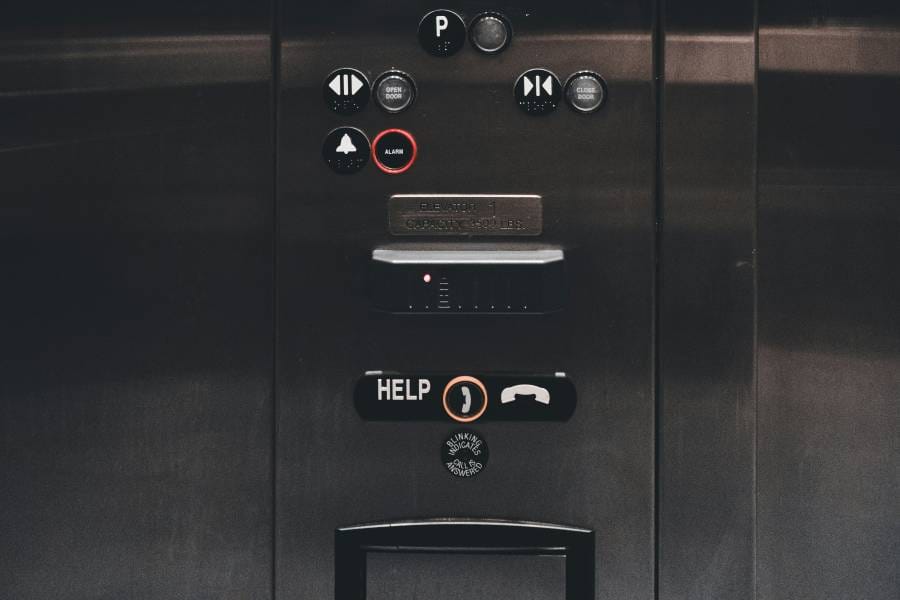
Emergency call boxes, gate intercoms, and elevator phones use Private Line Automatic Ringdown (PLAR) to instantly dial security when accessed.
Configuring standard Foreign Exchange Station (FXS) ports for PLAR is straightforward, but vendor quotes swing wildly.
Hidden markups stack up fast through inflated cloud PBX license fees, unnecessary proprietary gateways, and bloated field programming labor.
Deploying legacy Analog Telephone Adapters (ATAs) or a modern digital POTS Replacement solution gives you instant off-hook dialing without overpaying.
———————
👉 Related reads: Complete Cloud Phone System Guide and Elevator & Fire Code: POTS Line Replacement Guide.
Buyer’s shortcut 🔥
Skip the research, sales pitch & spam.
Take the Dialvice 5-minute quiz to find your exact Cloud Phone System.
75% of buyers prefer a “rep-free” experience, Gartner.
Key Takeaways & Quick Links
- PLAR Technical Function: Automatically routes off-hook emergency calls to central security desks without requiring keypad entry.
- Setup & Monthly Costs: $300–$950/line turnkey ($0–$350 hardware; bundled plans available); $10–$30/mo SIP or $35–$65/mo managed cellular.
- FXS Setup Workflow: Programming dial strings directly into local gateway firmware eliminates call delays and bypasses cloud PBX lag.
- Cost Minimization Strategy: Avoid enterprise seat fees by using utility licenses, direct IP-to-IP SIP routing, or multi-port gateways.
The short answer ⚡
Provisioning a single VoIP FXS PLAR line costs $300 to $950 per endpoint for turn-key hardware, dial plan scripting, and technician labor.
Core hardware runs $0 to $350, though many managed POTS Replacement providers include the gateway appliance for $0 upfront. Setup and cross-connect labor account for $200 to $600.
Monthly recurring fees run $10 to $30 for basic LAN SIP lines, or $35 to $65 for fully managed cellular POTS Replacement (including battery backup and failover).
Both slash costs compared to legacy $100+/month landlines.
Healthcare scenario: A hospital’s $14,100 savings
A hospital system in Pennsylvania needed to migrate 16 emergency wall phones from legacy copper POTS to their cloud phone system.
The local vendor quoted $18,200 ($1,137/phone) using costly enterprise user licenses and high programming fees.
By consulting an independent telecom advisor, the hospital bypassed those proprietary fees.
They consolidated the lines into central Managed POTS Replacement gateways while keeping existing copper runs.
Scripting hotline rules into local firmware dropped total project costs to $4,100 ($256/endpoint).
This saved $14,100 while adding compliant battery backup and cellular failover.
What PLAR / Hot-Line provisioning accomplishes
PLAR converts a standard analog FXS voice port into an immediate off-hook auto-dialer for keyless emergency phones, door boxes, and courtesy line stations.
| Mandate | Technical Specification | Cab Hardware Impact |
|---|---|---|
| Off-Hook Trigger | Detects immediate loop current voltage drop when handset lifts or button presses. | Applies immediate battery feed and opens local audio path. |
| Dial Plan Override | Bypasses digit collection timers to execute instant off-hook dial string rules. | Generates SIP INVITE packets instantly with target destination. |
| SIP Call Routing | Routes PLAR extension directly to central security, dispatch, or 911 PSAP. | Target extension or ring group alerts within milliseconds. |
💡 Derek’s Pro Tip: Configure the off-hook hotline rule directly inside the local ATA or Managed POTS Replacement gateway. Never rely solely on cloud PBX server-side auto-dialing rules. Local firmware scripting eliminates multi-second digit collection delays.

Itemized cost breakdown (hardware, licensing, labor)
Deploying VoIP FXS PLAR circuits requires evaluating gateway ports, software licenses, and field labor.
| Item / Service | Basic Build (1-2 ports) | Mid-Range Retrofit | High-Density / Ent. |
|---|---|---|---|
| FXS ATA / Managed POTS Gateway | $0 – $150 (Bundles or Basic ATA) | $180 – $350 (4–8 Port) | $450 – $1,200 (16–48 Port) |
| Recurring Service / Line Fee | $10 – $30 / mo (SIP utility line) | $15 – $35 / mo | $35 – $65 / mo |
| FXS Dial Plan Programming | $75 – $150 | $150 – $300 | $300 – $600 (Batch script) |
| Cross-Connect & Wiring | $100 – $200 | $200 – $400 | $400 – $800 (Demarc runs) |
| UPS / Power Back-up | $80 – $150 | $150 – $300 | $300 – $600 (Rackmount UL battery) |
Step-by-step FXS Gateway PLAR configuration
Verify your provider or internal team applies these configuration rules directly within the gateway web portal:
- Access port settings: Open your FXS gateway portal and navigate to Port Configuration → Dial Plan.
- Eliminate dial tone delay: Set the Off-Hook Auto-Dial Delay (Digit Timeout) parameter strictly to 0 seconds to prevent dead silence.
- Input auto-dial syntax: Enter your immediate off-hook hotline dial string rule so the FXS port triggers automatically without waiting for digit entry.
- Set security destination: Assign target extension 1001 (Security Desk or Emergency Ring Group).
- Enable disconnect supervision: Turn on Calling Party Control (CPC) or reversal disconnect signaling so the FXS port hangs up cleanly when security ends the call.
💡 Derek’s Pro Tip: Routing PLAR hotlines to external 911 dispatch requires verifying Kari’s Law & RAY BAUM’S Act compliance. The gateway must transmit exact dispatchable location data (building, floor, or room number) tied to that specific FXS port.
How to avoid PLAR licensing and provider surcharges
Many cloud PBX providers charge full enterprise user license fees ($25–$45/month) for every active FXS extension, even if that phone only dials one pre-programmed hotline number once a year.
You can optimize these costs using three strategies:
Assign “utility” or “common area” device licenses
Avoid paying full $30+ enterprise user seat fees for phones that only dial one number. Cloud providers offer dedicated “Utility,” “Common Area,” or “Analog Device” licenses for $5 to $10 per month.
Configure Direct IP-to-IP SIP Peering
If emergency phones route directly to an on-site security console over your local network (LAN/WAN), bypass cloud PBX extension fees entirely.
Set your FXS gateway to send direct SIP URI calls (sip:security@192.168.1.50:5060) straight to the security desk IP phone.
Consolidate ports on multi-port gateways
Instead of buying individual single-port adapters, aggregate analog runs back to a central closet using a multi-port Managed POTS Replacement gateway.
Per-port hardware expenses drop to $20–$30 per line (or $0 bundled).
💡 Derek’s Pro Tip: Use $5–$10/mo SIP utility licenses for basic indoor LAN phones. For mission-critical life-safety lines (elevators, alarms, gates), spend the $35–$65/mo for a Managed POTS gateway. This gives you mandatory battery backup and cellular failover.
Avoid non-compliance penalties and overcharging
Provisioning VoIP FXS ports for PLAR is the fastest way to replace expensive legacy analog POTS lines without sacrificing emergency responsiveness.
Complete turn-key field setups average $300 to $950 per line, with core hardware running $0 to $350 (or included at $0 capex under managed service plans).
Legacy ATAs work fine for basic indoor extensions.
For life-safety lines, managed POTS Replacement is the clear winner, delivering full code compliance, cellular redundancy, and immediate emergency dispatch.
Need POTS Replacement quotes? Contact Dialvice
Shopping for the exact cloud phone system? Start here 👇
Frequently Asked Questions
What is the difference between PLAR and a standard FXS extension?
A standard FXS extension supplies dial tone and waits for manual keypad entry. A PLAR-provisioned FXS port immediately executes an internal dial string the second the handset goes off-hook, ringing a preset destination instantly.
Can consumer ATAs be used for commercial PLAR emergency phones?
No. Safety-critical hotlines require enterprise-grade gateways or a Managed POTS Replacement gateway that support UL power standards, surge protection, ruggedized enclosures, and high-voltage ring generation across long copper runs.
How far can an emergency phone be located from the FXS gateway?
Standard commercial FXS gateways drive analog copper wiring runs between 3,000 and 6,000 feet (24 AWG wire). Longer distances across large facilities require fiber media converters or dedicated IP endpoints.
Does a Managed POTS Replacement gateway support PLAR configuration?
Yes. A Managed POTS Replacement gateway provides native FXS ports supporting PLAR off-hook auto-dialing, onboard battery backup, and dual-SIM 4G/5G cellular transport compliant with life-safety standards.
Why does a PLAR line experience a delay before ringing security?
Delays occur when the FXS gateway’s digit collection timeout is left at default settings (3–5 seconds). Setting the off-hook delay to 0 seconds inside local firmware ensures immediate call initiation.
Notice: For informational purposes only. Emergency systems must be installed by certified professionals to ensure local code compliance.
