
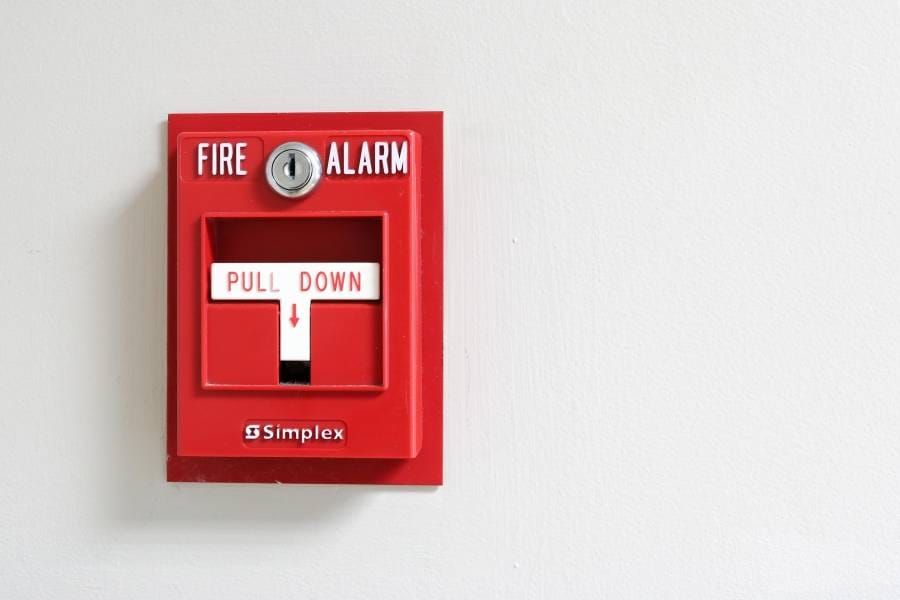


Elevator & Fire Code: POTS Line Replacement Guide
By: Derek Harris | Dialvice CEO | 30+ years’ experience
👉 5 mins saves you 15+ hours!
Updated October 14, 2026
The high cost of compliance in the digital age
Imagine you’re a property manager overseeing a high-rise residential complex. The annual fire safety inspection is tomorrow. You aren’t worried—you haven’t touched the systems in years.
But the inspector doesn’t head for the extinguishers; he goes straight for the telecom closet.
He tells you that because your carrier “sunset” the copper grid, your analog lines no longer meet mandated signaling rules.
This isn’t just a higher bill. It’s a compliance violation that could trigger an immediate evacuation order.
This is the new reality: Life-safety codes are finally crashing into the disappearing copper network. Property owners are getting caught off guard.
———————
👉 Explore our Complete Cloud Phone System Guide or get broader perspective of the copper sunset with our POTS Replacement guide.
Buyer’s shortcut 🔥
Skip the sales pitch & spam.
Take the Dialvice 5-Minute Quiz to find your precise Cloud Phone System.
75% of buyers prefer a “rep-free” experience, Gartner.
Key Takeaways & Quick Links
- Retail Failure Risk: Cheap adapters lead to cease-and-desist orders and massive lost revenue.
- NFPA 72 Standards: Fire alarms require “supervised” digital heartbeats to meet modern code.
- ASME A17.1 Codes: New elevator rules for visual communication and 4-hour battery backups.
- Insurance Liability: Aging copper leads to policy denials and “willful negligence” lawsuits.
- The “Handshake” Trap: A dial tone doesn’t mean your alarm is actually communicating.
- Dual-Path Strategy: Ensuring 10-second failover between Ethernet and 5G/LTE cellular paths.
Retail Strip Mall: $50,000 fire inspection failure
Look at what happened to a mid-sized retail strip center in Florida recently. To save a few bucks, the owner moved their fire alarm line to a cheap, retail-grade internet phone adapter.
During a routine check, the Fire Marshal triggered a test alarm. The signal never reached the station because the cheap adapter compressed the data into garbage.
The Fire Marshal didn’t just write a ticket. He issued a “Cease and Desist” for the entire building.
The tenants—including a busy restaurant—had to close their doors for three days. Meanwhile, the owner scrambled to get a compliant POTS Replacement bridge installed.
The lost revenue exceeded $50,000 for those tenants. In this business, “cheap” is the most expensive word you can use.
NFPA 72 rules: Why fire alarms need a heartbeat
The National Fire Protection Association (NFPA) doesn’t play around when it comes to how fire alarms talk to monitoring stations. NFPA 72 requires that your communication path be “supervised.”
Basically, if the line is cut, the central station needs to know about it within an hour.
Old copper lines used to be supervised by the carrier’s central office, but those days are gone. As carriers walk away from maintaining these lines, that reliability is vanishing.
This is why the NFPA now mandates digital alternatives that use “heartbeat” signals to check the connection every few minutes.
If you’re running an unmanaged internet connection without a cellular backup—you’re almost certainly in violation of these survivability standards.
💡 Derek’s Pro Tip: Demand a “UL 864” certificate from your provider. It’s the gold standard for fire protective signaling. If the salesperson can’t produce that specific document, walk away. A savvy fire inspector will spot unlisted hardware in seconds.
👉 Related read: UL 864 Fire Alarm Cell Dialer Cost
ASME A17.1: New ‘Video & Text’ elevator rules
Elevator communication falls under the American Society of Mechanical Engineers (ASME). Their A17.1 code has evolved to require much more than just a dial tone.
New standards now mandate visual communication for the hearing impaired. Some jurisdictions even require live video feeds so dispatchers can see inside the cab during a crisis.
New ASME A17.1 safety mandates
- Visual Communication: Text displays that confirm “Help is on the way” for hearing-impaired passengers.
- Two-Way Video: Allowing dispatchers to assess medical emergencies or passenger counts visually.
- Redundant Power: Onboard batteries that maintain a dial tone for 4+ hours during a total blackout.
- Continuous Supervision: Instant alerts to the owner the second the elevator phone loses its connection.
A Cloud Phone or on-site VoIP system fails these tests every time. It relies on the building’s local Wi-Fi or switches that aren’t backed up. To stay legal, you need a managed bridge with its own dedicated, high-capacity battery enclosure.
👉 Related read: ASME A17.1 Elevator Video Monitoring Costs
Why insurance carriers are tightening the screws
It isn’t just the Fire Marshal you should be worried about; it’s your insurance adjuster. Insurance companies are aggressively performing “Risk Audits” on commercial properties right now.
Failed emergency calls are one of the single highest liability risks for property insurers.
Insurance risk factors for aging copper
- Negligence Claims: Using unsupported tech during a fire is a “willful negligence” lawsuit waiting to happen.
- Policy Denials: Insurers are now canceling coverage for buildings that fail to meet current NFPA standards.
- Premium Surcharges: Insurers hate copper. Upgrading to a digital bridge lowers your risk—and your rates.
- Life-Safety Gaps: A dead elevator phone during an injury is a direct ticket to a litigation nightmare.
Moving to a supervised, dual-path solution isn’t just a tech upgrade; it’s a legal shield.
Technical trap of “Voice-Only” adapters
I see this all the time: a business owner thinks that if they hear a dial tone in the elevator cab, they’re good. That is a dangerous lie. A dial tone is not a “Handshake Success.”
The “Handshake” is that digital conversation between your alarm panel and the station receiver. Standard adapters compress data to save bandwidth. This distorts the alarm’s signal.
You’ll end up with “Communication Failure” (FTC) errors on your keypad. A compliant bridge uses “Lossless” signaling to make sure every digital packet arrives exactly the way the panel intended.
💡 Derek’s Pro Tip: Don’t just check for dial tone. Have your monitoring company verify a “Contact ID” signal. If they can see the specific zone that was triggered, you’re clean. If they just see a “general alarm,” your bridge is garbling the data.
Dual-path communication strategy
If you want to sleep at night, you need a dual-path strategy. This ensures your life-safety systems don’t depend on a single point of failure.
- Primary Path: A hardwired Ethernet connection to the building’s network.
- Secondary Path: A dual-carrier 5G radio in “Hot Standby.”
- Failover Logic: Switches paths in under 10 seconds if a failure is detected.
- External Antennas: Required for bridges in basements or “dead zones.”
These bridges use the global reach of Microsoft Azure to keep you connected. Your emergency data finds a way out, even if your local internet has a bad day.
Edge case: Legacy “Ring-Down” circuits
Older buildings often have a “Ring-Down” circuit. The elevator phone doesn’t dial a number; instead, picking up the handset triggers a ring at the security desk via a voltage drop.
Most VoIP providers can’t handle this because they need digits to route a call. To fix this, your bridge has to support “FXS PLAR” (Private Line Automatic Ring-down).
This is a technical nuance we specialize in at Dialvice. Without this specific setting, that 40-year-old elevator phone is just a dead piece of plastic on the wall.
👉 Related read: VoIP FXS PLAR Port Provisioning Costs
Bottom Line: Digital compliance is non-negotiable
Look, compliance isn’t as simple as paying a phone bill anymore. As the copper network rots away, the burden of maintaining a code-compliant path has moved from the carrier to you—the building owner.
Choosing a managed, UL-listed POTS Replacement solution protects your tenants, your property, and your insurance standing.
Need POTS Replacement quotes for non-voice lines only? Contact us
Still on voice lines, PRI/T1’s or SIP Trunks? Start here 👇
Frequently Asked Questions
What is the difference between a standard ATA and a POTS bridge?
A standard ATA is for making phone calls. It doesn’t have the battery backup, cellular redundancy, or UL-864 listings required for life-safety. A POTS bridge is a ruggedized, supervised piece of equipment built for one job: alarms and elevators.
Will the fire inspector check my phone lines?
Absolutely. Inspectors are trained to look for the “FTC” (Failure to Communicate) light on your fire panel. They’re also starting to check the battery backup enclosures for elevator phones to make sure they meet the 4-hour survivability rule.
Does “Managed” mean someone is watching my lines?
Yes. A managed solution includes 24/7 “Heartbeat” monitoring. If your bridge loses power or its cellular signal, the provider knows immediately. This allows you to fix a problem before an emergency happens, which is a core requirement for modern safety codes.
Can I use a cellular-only solution for my fire alarm?
Some places allow it, but we always recommend a dual-path (Cellular + IP) approach. It’s the most reliable method and ensures you meet the strict “Supervision” intervals required by the NFPA.
What happens if my building has poor cellular reception?
If your telecom room is deep underground, we use a high-gain external antenna. We run a specialized cable from the bridge to the outside of the building to make sure you have a rock-solid connection to the tower.
How do I know if my hardware is UL-listed?
Check the device for a silver or white sticker with the “UL” logo. It should say “864” for Fire or “2054” for battery safety. If it’s not there, ask your provider for the official UL “Letter of Compliance.” If they can’t give it to you, you have the wrong hardware.
Continue your research:
👉 POTS in a Box vs ATA: Best Life-Safety Hardware
Notice: For informational purposes only. Emergency systems must be installed by certified professionals to ensure local code compliance.
