


POTS in a Box Equipment Lease Costs
By: Derek Harris | Dialvice CEO | 30+ years’ experience
👉 5 mins saves you 15+ hours!
Updated October 7, 2026
Don’t overpay for POTS Replacement hardware
As the FCC copper sunset drives landline prices up, replacing legacy copper requires choosing the right hardware financing model.
POTS in a Box appliances connect life-safety fire alarms, elevator phones, and access gates to cellular networks.
Vendors structure these deployments as upfront hardware purchases (CapEx) or monthly bundled leases (OpEx).
Evaluating total cost of ownership, battery coverage, and warranty terms ensures you pick the right financial model for your business.
———————
👉 Related reads: Complete Cloud Phone System Guide and POTS in a Box vs ATA: Best Life-Safety Hardware.
Buyer’s shortcut 🔥
Skip the research, sales pitch & spam.
Take the Dialvice 5-minute quiz to find your exact Cloud Phone System.
75% of buyers prefer a “rep-free” experience, Gartner.
Key Takeaways & Quick Links
- Leasing explained: Monthly gateway leases ($15–$45/mo) bundle FXS ports, dual-SIM LTE/5G modems, 24-hour backup batteries, and cloud health monitoring.
- CapEx vs. OpEx: Upfront buys ($600–$1,800/box) break even in 14–18 months, while HaaS leases ($50–$95/line) cover lifetime maintenance with $0 down.
- Cost drivers: Port density (2 to 16 ports), 24-hour code-compliant battery enclosures, and NEMA weatherproof cases determine monthly hardware pricing.
- Lease traps: Protect your contract by insisting on $1 buyouts, 90-day auto-renewal opt-outs, and overnight advanced RMA replacements.
The short answer ⚡
Leasing a commercial POTS in a Box gateway costs $15 to $45 per month per unit as a standalone equipment fee.
Bundled Hardware-as-a-Service (HaaS) plans run $50 to $95 per line per month.
HaaS covers the equipment, dual-carrier airtime, 24-hour battery swaps, and NFPA 72 cloud monitoring in a single fee.
Buying the hardware upfront costs $600 to $1,800 per box plus installation and a standalone $35–$55 monthly airtime plan.
Retail & Hospitality scenario: $28,400 yearly savings
A Midwest hospitality group managed 30 copper lines across 15 hotels and restaurants for elevators, fire panels, security gates, and POS backup.
Carrier copper rate hikes pushed monthly bills to $220 per line, costing over $79,200 annually.
The group evaluated two POTS Replacement options:
- Option A required $13,500 upfront CapEx ($900 per 2-port gateway) with $40/line airtime.
- Option B offered a bundled OpEx lease at $58 per line per month with $0 upfront capital.
The group selected the Option B. By avoiding $13,500 in upfront costs, they reduced annual expenses from $79,200 down to $20,880.
The agreement included lifetime hardware warranties, automated battery replacements, and a smooth path to upgrade their administrative desk phones to a Cloud PBX.
What a POTS in a Box lease fee includes
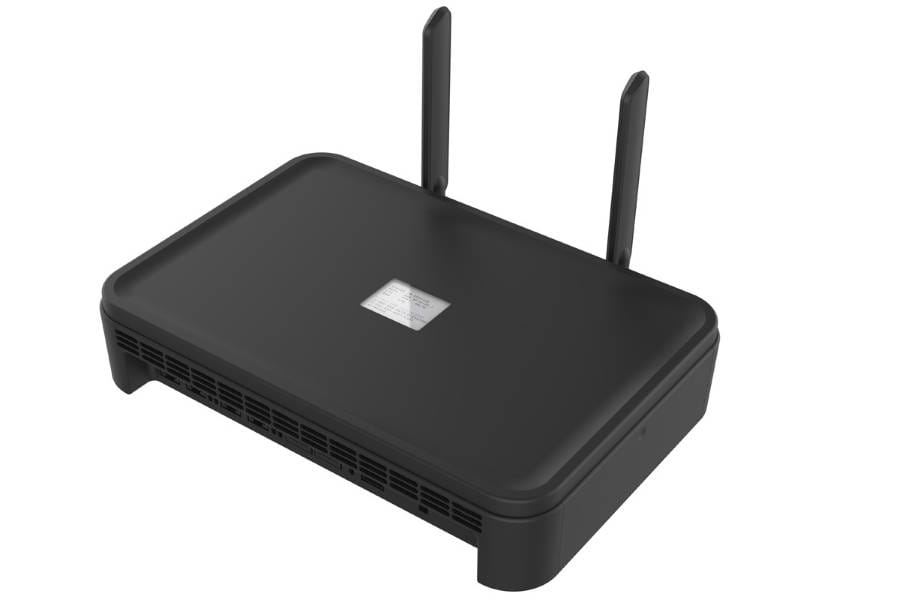
A commercial POTS in a Box appliance is far more complex than a standard consumer router or VoIP ATA.
To meet strict building, life-safety, and fire codes, leased hardware includes specialized onboard components designed for maximum operational uptime.
| Item | Specification | Function |
|---|---|---|
| FXS Ports | 2, 4, or 8 RJ-11/RJ-21 interfaces | Delivers ring voltage (-48V DC) and dial tone to legacy dialers. |
| Dual-SIM Module | Multi-carrier 5G / LTE Cat 4/6 modem | Auto-fails over between AT&T and Verizon towers. |
| Battery Enclosure | 24-Hour SLA or LiFePO4 battery backup | Powers the box during outages for NFPA 72 & ASME A17.1 compliance. |
| Cloud Telemetry | Automated heartbeat polling modules | Sends line status, AC power drop, and battery degradation alerts. |
💡 Derek’s Pro Tip: Confirm battery maintenance terms before signing. SLA backup batteries degrade every 3 years. If replacements aren’t covered in your lease, expect unexpected $80–$150 service fees per box during annual fire inspections.

Financial comparison: Leasing vs. Upfront purchase
Deciding between buying or leasing POTS replacement hardware depends on your organization’s capital budget, taxation preferences, and internal maintenance bandwidth.
| Metric | Upfront Purchase (CapEx) | Bundled Lease / HaaS (OpEx) |
|---|---|---|
| Initial Expense | $600 – $1,800 per box + install | $0 – $150 (Setup / Shipping) |
| Monthly Line Fee | $35 – $50 / line (Airtime & monitoring only) | $50 – $95 / line (All-in bundle) |
| Maintenance & Warranty | 1–3 Year factory warranty | Lifetime advanced swap SLA |
| Battery Swaps | Out-of-pocket ($80–$150 per unit) | Included in monthly fee |
| Tech Refresh | Customer buys replacement box | Provider upgrades box automatically |
| 3-Year TCO (4 Lines) | ~$6,200 – $8,400 total | ~$7,200 – $9,600 total |
Itemized lease cost factors
Monthly equipment lease prices fluctuate based on three key hardware variables:
FXS port density
Single or 2-port gateways deployed for standalone elevator phones lease for $15–$20/month.
High-density 8-port or 16-port gateways used in central telecom risers lease for $35–$60/month.
Standby battery capacity (12-Hour vs. 24-Hour)
Standard applications (security doors, intercoms) use 4 to 12-hour batteries.
Life-safety fire panels (NFPA 72) and elevator cabs (ASME A17.1) require 24-hour battery enclosures. They also add $5 to $15/month to the lease.
NEMA weatherproof enclosures
Outdoor installations, such as parking lot emergency pillars or gate access points, require NEMA 4X weather-sealed enclosures.
Leasing an outdoor-rated gateway adds $10 to $20/month.
💡 Derek’s Pro Tip: If you purchase hardware outright to lower monthly bills, set aside a replacement fund. Wireless standards shift over time. A managed lease transfers cellular carrier band changes and hardware obsolescence risk entirely to the vendor.
Avoiding lease contract traps
While equipment leasing simplifies budgeting, vendors frequently embed restrictive terms inside multi-year service contracts.
Protect your organization by reviewing these three critical lease terms:
- Auto-renewal clauses: Contracts often auto-renew for 12–24 months unless cancelled 90 days prior. Require month-to-month continuation after the initial term.
- Open-ended buyouts: Insist on a $1 buyout or capped Fair Market Value (FMV) option to prevent end-of-term penalties if you decide to buy the hardware.
- Slow hardware swaps: Outages on life-safety lines cause code violations. Require overnight shipping of pre-configured replacement units (Advanced RMA).
💡 Derek’s Pro Tip: Calendar your lease expiration date on day one. Set a reminder 120 days prior to your contract end date to audit your lines, review new carrier rates, or submit your opt-out notice before auto-renewal windows close.
Upgrade to managed POTS Replacement & cut costs
Leasing POTS in a Box hardware through a Hardware-as-a-Service (HaaS) model gives property owners and business managers a predictable, risk-free path away from copper landlines.
While purchasing hardware upfront offers a slightly lower 3-year cost, leasing eliminates capital barriers, guarantees battery maintenance, and keeps life-safety systems compliant.
Need Managed POTS Replacement quotes? Contact Dialvice.
Shopping for the exact cloud phone system? Start here 👇
Frequently Asked Questions
What happens to leased equipment if we sell or vacate a property?
Most providers allow contract reassignments to the new property owner or permit transferring the leased hardware to another location within your business portfolio.
Are leased POTS in a Box gateways pre-configured before delivery?
Yes. Managed providers pre-provision gateways with your account details, emergency 911 profiles, and dual-SIM profiles prior to shipping, enabling plug-and-play field installation.
Is self-installation supported, or is a truck-roll required?
Many POTS in a Box gateways support plug-and-play self-installation by on-site facility staff. However, complex fire panels or multi-line risers may require a certified low-voltage technician ($150–$300 flat fee).
What happens when cellular carriers upgrade from LTE to 5G?
Under a managed Hardware-as-a-Service (HaaS) lease, the provider is responsible for upgrading or replacing the gateway at no charge to keep your lines active on modern carrier networks.
Is leasing or buying better for multi-location portfolios?
Leasing via an OpEx model is generally better for multi-site portfolios. It avoids large upfront capital outlays, consolidates billing, and outsources hardware replacement and battery maintenance across all sites.
Notice: For informational purposes only. Emergency systems must be installed by certified professionals to ensure local code compliance.
