


The Hidden Cost of Legacy 66 Block Telecom Wiring
By: Derek Harris | Dialvice CEO | 30+ years’ experience
👉 5 mins saves you 15+ hours!
Updated August 11, 2026
The money pit in your IT closet
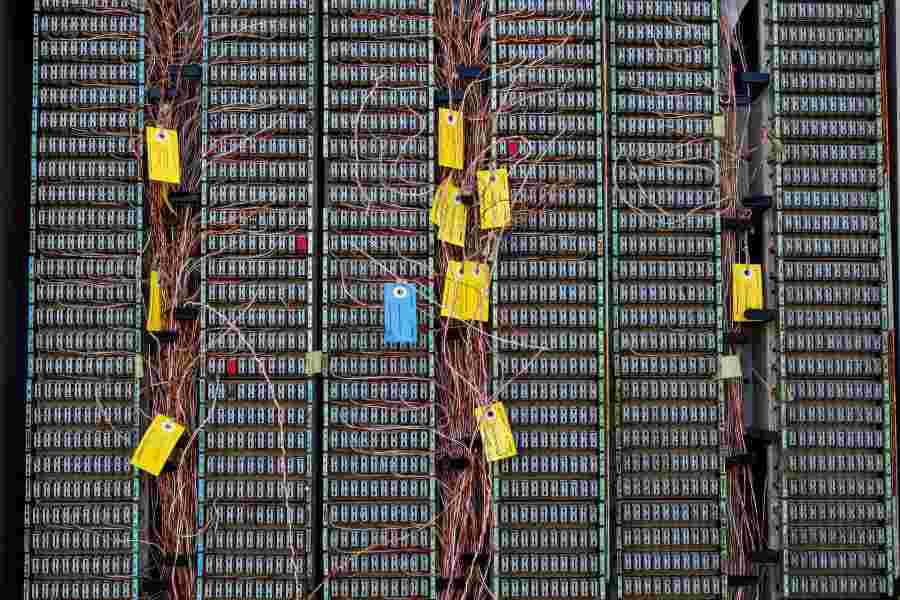
Look in your server room or back utility closet. If you see wooden backboards covered in beige plastic blocks and tangled wires, you’re looking at a 66 Punch-Down Block.
Western Electric designed this analog system in 1962. It was the phone standard for over 40 years. Today, it’s an expensive liability, driving by the FCC Copper Sunset.
Legacy Cat3 copper wiring creates severe network bottlenecks. It causes phantom maintenance bills and triggers costly tech visits for simple desk moves.
———————
👉 Check out our complete cloud phone system guide and the 5 hidden costs of on-prem phone systems.
Buyer’s shortcut 🔥
Skip the research, sales pitch & spam.
Take the Dialvice 5-Minute Quiz to find your precise Cloud Phone System.
75% of buyers prefer a “rep-free” experience, Gartner.
Key Takeaways & Quick Links
- Hardware Overhead & Noise: Bridging IP phones or ATAs into old 66 blocks add audio static and hardware failure points.
- Speed & Power Bottleneck: Cat3 wiring caps out at 10 Mbps and cannot deliver Power over Ethernet (PoE).
- Recurring Tech Expenses: Desk moves require costly physical punch-down service calls instead of instant software updates.
- Legacy vs. Modern: Cat6 patch panels outperform 66 blocks across speed, PoE power, and physical space.
- High-ROI Upgrade: Replacing legacy blocks with Cat6 patch panels costs $150–$300 per drop and reduces service calls.
Healthcare scenario: A clinic’s $14,000 cabling emergency
A 12-doctor suburban clinic upgraded to a hosted cloud phone system. They ordered new IP desk phones expecting a simple plug-and-play setup.
On launch day, installers found legacy Cat3 wiring punched down to 66 blocks in the basement. Because Cat3 cannot carry Ethernet data or Power over Ethernet (PoE), the new phones didn’t work.
To avoid total shutdown, they had to install bulky Analog Telephone Adapters (ATAs) and wall power plugs at every desk.
The result? Audio static, messy wires, and an emergency $14,000 quote for full re-cabling.
💡 Derek’s Pro Tip: Check your IT closet before signing a cloud phone contract. If you see 66 blocks, audit your station cables first. Knowing whether your walls hold Cat3 or Cat6 determines if your upgrade is plug-and-play or requires a recabling budget.
What’s 66 Block and how does it work?
A 66 block is a legacy distribution frame that manually routes analog landlines throughout a building using mechanical copper connections. Here is how it functions and why it fails in modern IP networks:
An analogue solution from a bygone era
A 66 block (specifically the 50-pair 66M1-50 block) uses Insulation Displacement Connectors (IDC).
Technicians use a spring-loaded punch-down tool to force solid copper wire pairs into metal clips, slicing the plastic insulation to establish an electrical contact.
Metal “bridge clips” are then placed across the center pins to complete the circuit between incoming carrier landlines and wall jacks throughout the building.
Why it worked then vs. Why it fails now
When phone calls were standard 64 kbps analogue audio signals, 66 blocks were indestructible and easy to troubleshoot with a simple technician butt-set.
However, modern digital communications rely on high-frequency packet data.
The wide pin spacing and untwisted conductor end on a 66 block create severe crosstalk, signal attenuation, and electromagnetic interference (EMI) that degrades digital IP data streams instantly.
💡 Derek’s Pro Tip: Never let a vendor use “66-block-to-RJ45” adapter cables or adapter clips as a permanent VoIP fix. It’s a temporary band-aid that causes static, dropped calls, and random phone resets whenever someone touches the wall board.
The 4 hidden costs of keeping legacy wiring
1. Recurring “truck rolls” for employee desk moves
On a modern Cat6 network rack, moving an employee from Desk A to Desk B takes 30 seconds. You simply reassign their extension in your cloud VoIP portal or move a patch cable between switch ports.
With a 66 block, someone must physically trace the cross-connect wire, pull bridge clips, and re-punch physical copper pairs on the wall.
At $120 to $180 per hour for specialized low-voltage labor, these truck rolls rack up thousands in avoidable operational expenses each year.
2. Inability to deploy Power over Ethernet (PoE)
Modern IP desk phones, Wi-Fi 6E Access Points, and security cameras draw electricity directly through network cables using standard PoE (IEEE 802.3af/at).
66 blocks and Cat3 wiring cannot handle standard PoE power loads safely without risking thermal resistance or short circuits.
This forces you to buy $25–$40 wall power adapters for every desk phone, wasting money and cluttering outlets.
3. Mystery troubleshooting & ghost faults
Copper wiring on 66 blocks oxidizes over time, especially in moist basements or un-conditioned utility closets. Loose bridge clips and corroded pins lead to constant line noise, call dropouts, and static.
These phantom issues waste hours of IT troubleshooting with zero clear resolution.
4. Zero support for unified data & voice convergence
Modern smart offices run voice, data, access control, and video on a single converged infrastructure.
Maintaining duplicate wiring ecosystems—Cat3 for voice and Cat6 for internet—doubles your physical infrastructure maintenance.
You end up paying twice the overhead for zero operational benefit.
💡 Derek’s Pro Tip: Stop paying $150+ per hour for “truck rolls” to complete simple employee desk moves. Upgrading to a Cat6 patch panel lets your internal team reassign extensions in seconds via software at zero cost.

Comparison: 66 Block vs. Modern structured patch panels
Here is how legacy 66 block wiring stacks up against modern Cat6 structured cabling in a business environment:
| Metric | Legacy 66 Block | Modern Cat6 |
|---|---|---|
| Max Data Speed | 10 Mbps (Voice / Analog only) | Up to 10,000 Mbps (10 Gbps) |
| Power over Ethernet (PoE) | ❌ None (Requires wall plugs) | Full PoE / PoE+ / PoE++ (Up to 90W) |
| Move, Add, Change (MAC) Cost | $120–$250 per visit (Manual labor) | $0 (Soft re-assignment or RJ45 swap) |
| Hardware Lifespan | Obsolete / End-of-Life | 15–25 Years (TIA/EIA Compliant) |
| Physical Footprint | Large wall-mounted backboards | Compact 1U/2U rack-mounted panels |
Upgrading your IT closet without downtime
If your office still relies on 66 blocks, you don’t have to tear down walls overnight. A structured, phased cabling overhaul ensures zero loss of business continuity:
- Audit existing cable drops: Hire a low-voltage technician to trace your wall jacks. Past installers often punched standard Cat5e or Cat6 cables directly down to 66 blocks out of laziness, meaning you might already have usable wiring in place.
- Mount a swing-out network cabinet: Install a standard 19-inch wall-mount rack equipped with a Gigabit PoE+ switch. Add a 24- or 48-port RJ45 Cat6 patch panel to handle all incoming lines.
- Pull new Cat6 cabling: Replace old 2-pair copper runs with high-performance Cat6 cables ($150–$300 per drop). Have your contractor test and certify every drop with a Fluke analyzer.
- Cut over to Cloud VoIP: Plug your IP phones directly into the new Cat6 wall plates. Once active, power down the old analog PBX and permanently remove the 66 block wall board.
💡 Derek’s Pro Tip: If you have non-voice lines—like fire alarms, elevator phones, or faxes—you will need a wireless POTS Replacement box alongside your new IP phone system.
The bottom line: Stop funding legacy copper
A 66 block on your IT closet wall is a clear warning sign that your business infrastructure is running on borrowed time.
While re-cabling requires an upfront capital expenditure, continuing to maintain 60-year-old analog copper topology in a cloud-first era is a guaranteed money pit.
Cut the legacy wires, install structured Cat6 cabling, and enjoy clean HD voice and gigabit speeds across your business.
Skip the sales pitches and spam. Let Dialvice find your exact cloud match in minutes. 👇
Frequently Asked Questions
Can I convert a 66 block to a Cat6 patch panel using adapter clips?
No. Adapters change the physical plug type, not the cable specification. If your walls contain Cat3 copper, an RJ45 adapter will not support Gigabit data speeds or Power over Ethernet.
What is the main difference between a 66 block and a 110 block?
A 66 block uses wider pin spacing built for low-frequency analog voice. A 110 block is a denser system built for early data cables (Cat5/Cat5e). Both are obsolete compared to modern RJ45 patch panels.
How much does it cost to decommission an old 66 block wall?
Removing the board costs $200–$500 in labor. The main investment is running new Cat6 cabling, which averages $150–$300 per drop depending on building layout.
Can I run cloud VoIP over legacy 66 block wiring?
Only by using Analog Telephone Adapters (ATAs). However, this limits you to basic analog audio, requires individual wall power adapters, and removes modern IP phone features like HD voice and video calls.
How do I tell if my building cable is Cat3 or Cat6?
Look at the text printed along the outer plastic jacket of the cable. Cat3 typically has 2 or 3 loosely twisted wire pairs inside, while Cat6 features 4 tightly twisted pairs and a central plastic spline insulator.
Notice: For informational purposes only. Emergency systems must be installed by certified professionals to ensure local code compliance.
